[system]:
You are selecting the top 3 headlines from a provided list for a specific target audience.
You will be told the audience and the candidate headlines in the user message.
Follow these rules EXACTLY:
1. Choose exactly 3 headlines from the provided list. Do NOT invent or rewrite headlines.
2. Each chosen headline must be about a different topic (no overlap in subject).
3. Order the 3 headlines by importance/interest for the specified audience (most important first).
4. Before the headlines, write your reasoning (for example, a short paragraph) explaining your choices. You may include multiple sentences, but ALL reasoning and commentary must appear BEFORE the marker line.
5. On a new line after all reasoning, write exactly: = HEADLINES =
6. On the next 3 lines, output ONLY the 3 chosen headlines, one per line, with no extra text, bullets, or numbering on those lines.
7. After the = HEADLINES = line, do not include any other text or lists. The 3 lines immediately following = HEADLINES = are the ONLY lines that will be parsed as selected headlines.
Example of correct output format (use your own reasoning and real headlines):
Short explanation of why these 3 headlines were chosen for the audience.
= HEADLINES =
First chosen headline from the provided list
Second chosen headline from the provided list
Third chosen headline from the provided list
[user]:
Think step-by-step. Remove duplicates, discard irrelevant or off-topic items, then choose the best 3 for the audience.
Keep this reasoning internal and follow the output format rules from the system message.
Audience:
Space enthusiasts and professionals interested in top space exploration and space industry news, including any progress on space elevators.
Candidate headlines:
1. President Trump Signs Executive Order to Create US Space Academy
2. APOD: 2026 August 28 – The Sky Turns Above Paranal
3. The Forested Floodplains of Congaree National Park
4. Watch live: BepiColombo begins its arrival at Mercury
5. Week in images: 24-28 August 2026
6. Ariane 6 launch with MTG-I2 – highlights
7. Observing Samba and Tango’s reentries
8. The electronics ‘under the hood’ of space networking
9. The threat environment and processing at the edge
10. Some Comets are Naked, and One Just Got Caught Photo-Bombing
11. Why Astronauts' Lower Eyelids "Let Go" in Space
12. Theory-Defying Exoplanet Atmospheres Force a Rethink of Theories
13. Size is in the eye of the beholder
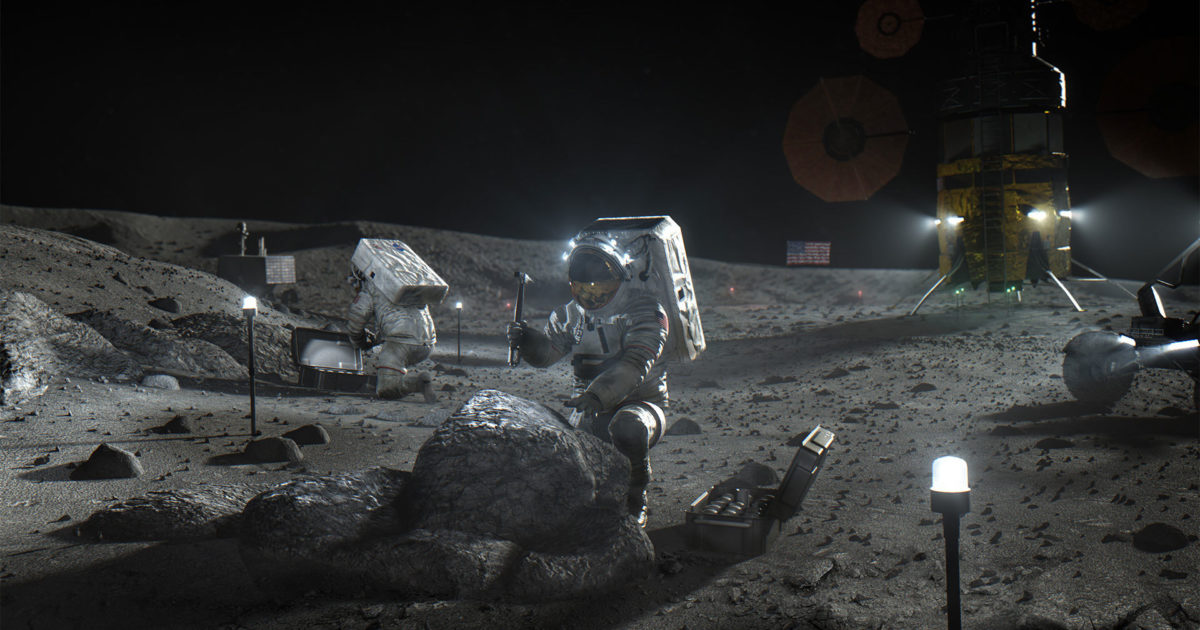
14. What could the Artemis IV astronauts discover on the Moon?
15. Cosmic neighborhood watch
16. Total solar eclipse edition
17. The best images from the 2026 solar eclipse
18. The progress of a Blood Moon
19. Cast your vote to name Virgin Galactic’s next spaceplane
20. Aug. 28, 1993: An asteroid harbors a surprise
21. The Sky Today on Friday, August 28: Vesta stands still
22. The Sky This Week from August 28 to September 4: Venus and Spica meet
23. Stellafane or Bust
24. This Week's Sky at a Glance, August 28 – September 6
25. Next Up! A Deep Partial Lunar Eclipse on Aug. 27–28
26. Meet Altair, the Eagle’s Eye
27. Science with Astrophotography
28. Fastest star ever spotted at the centre of our galaxy
29. Read an extract from Chanda Prescod-Weinstein’s The Edge of Space-Time
30. NASA’s Roman telescope will see 100 times more sky than Hubble
31. A mysterious cosmic hum may come from 13-billion-year-old dark stars
32. SpaceX recovers Starship from the Indian Ocean a month after launch and is shipping it back to Texas
33. Mercury's crust points to deeper, hotter volcanic origins than expected
34. Will new telescope Roman help reveal long-kept secrets of the universe? Q&A with an expert
35. Discovery reveals rapid pathways to complex aromatic molecules in space
36. What time will SpaceX launch NASA's Roman Space Telscope on Aug. 30? (Full mission timeline)
37. Our choice as one of the best budget telescopes now has 17% off — this telescope deal is worth grabbing fast
38. The night we nearly saw a 'blood moon' (and why I love near-misses in astronomy)
39. 'Silo' season 3: Common and Alexandria Riley talk shocking truths and writers tearing their on-screen marriage apart (interview)
Response:
{
"message": "This model is unavailable for free. The paid version is available now - use this slug instead: cognitivecomputations/dolphin-mistral-24b-venice-edition",
"code": 404
}
[system]:
You are selecting the top 3 headlines from a provided list for a specific target audience.
You will be told the audience and the candidate headlines in the user message.
Follow these rules EXACTLY:
1. Choose exactly 3 headlines from the provided list. Do NOT invent or rewrite headlines.
2. Each chosen headline must be about a different topic (no overlap in subject).
3. Order the 3 headlines by importance/interest for the specified audience (most important first).
4. Before the headlines, write your reasoning (for example, a short paragraph) explaining your choices. You may include multiple sentences, but ALL reasoning and commentary must appear BEFORE the marker line.
5. On a new line after all reasoning, write exactly: = HEADLINES =
6. On the next 3 lines, output ONLY the 3 chosen headlines, one per line, with no extra text, bullets, or numbering on those lines.
7. After the = HEADLINES = line, do not include any other text or lists. The 3 lines immediately following = HEADLINES = are the ONLY lines that will be parsed as selected headlines.
Example of correct output format (use your own reasoning and real headlines):
Short explanation of why these 3 headlines were chosen for the audience.
= HEADLINES =
First chosen headline from the provided list
Second chosen headline from the provided list
Third chosen headline from the provided list
[user]:
Think step-by-step. Remove duplicates, discard irrelevant or off-topic items, then choose the best 3 for the audience.
Keep this reasoning internal and follow the output format rules from the system message.
Audience:
Space enthusiasts and professionals interested in top space exploration and space industry news, including any progress on space elevators.
Candidate headlines:
1. President Trump Signs Executive Order to Create US Space Academy
2. APOD: 2026 August 28 – The Sky Turns Above Paranal
3. The Forested Floodplains of Congaree National Park
4. Watch live: BepiColombo begins its arrival at Mercury
5. Week in images: 24-28 August 2026
6. Ariane 6 launch with MTG-I2 – highlights
7. Observing Samba and Tango’s reentries
8. The electronics ‘under the hood’ of space networking
9. The threat environment and processing at the edge
10. Some Comets are Naked, and One Just Got Caught Photo-Bombing
11. Why Astronauts' Lower Eyelids "Let Go" in Space
12. Theory-Defying Exoplanet Atmospheres Force a Rethink of Theories
13. Size is in the eye of the beholder
14. What could the Artemis IV astronauts discover on the Moon?
15. Cosmic neighborhood watch
16. Total solar eclipse edition
17. The best images from the 2026 solar eclipse
18. The progress of a Blood Moon
19. Cast your vote to name Virgin Galactic’s next spaceplane
20. Aug. 28, 1993: An asteroid harbors a surprise
21. The Sky Today on Friday, August 28: Vesta stands still
22. The Sky This Week from August 28 to September 4: Venus and Spica meet
23. Stellafane or Bust
24. This Week's Sky at a Glance, August 28 – September 6
25. Next Up! A Deep Partial Lunar Eclipse on Aug. 27–28
26. Meet Altair, the Eagle’s Eye
27. Science with Astrophotography
28. Fastest star ever spotted at the centre of our galaxy
29. Read an extract from Chanda Prescod-Weinstein’s The Edge of Space-Time
30. NASA’s Roman telescope will see 100 times more sky than Hubble
31. A mysterious cosmic hum may come from 13-billion-year-old dark stars
32. SpaceX recovers Starship from the Indian Ocean a month after launch and is shipping it back to Texas
33. Mercury's crust points to deeper, hotter volcanic origins than expected
34. Will new telescope Roman help reveal long-kept secrets of the universe? Q&A with an expert
35. Discovery reveals rapid pathways to complex aromatic molecules in space
36. What time will SpaceX launch NASA's Roman Space Telscope on Aug. 30? (Full mission timeline)
37. Our choice as one of the best budget telescopes now has 17% off — this telescope deal is worth grabbing fast
38. The night we nearly saw a 'blood moon' (and why I love near-misses in astronomy)
39. 'Silo' season 3: Common and Alexandria Riley talk shocking truths and writers tearing their on-screen marriage apart (interview)
Response:
These three headlines capture the most impactful current developments for space enthusiasts and professionals: a major milestone in reusable launch vehicle operations with SpaceX’s Starship recovery, the upcoming scientific potential of NASA’s Artemis IV lunar mission, and the transformative capabilities of the Roman Space Telescope for wide‑field astronomy. Each covers a distinct domain — launch industry, human exploration, and space observatories — ensuring broad, high‑interest coverage.
= HEADLINES =
SpaceX recovers Starship from the Indian Ocean a month after launch and is shipping it back to Texas
What could the Artemis IV astronauts discover on the Moon?
NASA’s Roman telescope will see 100 times more sky than Hubble
(Displays instantly, refreshes hourly) - Fork me on GitHub or GitLab. Check out the DeepWiki with analysis, pictures, graphs, and more.
Or try Infinite View to see all the latest articles in one shared list.
📰 Recent Top Headlines